ETHICS IN TRUE CRIME: September 2026 podcast playlist
True crime has become a massive cultural phenomenon—but what happens when real people’s trauma, loss, and suffering become entertainment? This playlist explores the ethics of true crime from the perspectives of storytellers, journalists, victims, survivors, and listeners. We’ll consider questions about empathy, exploitation, sensationalism, privacy, and the responsibilities of both creators and consumers. As you listen, think about where you draw the line between telling an important story and turning someone else’s tragedy into entertainment.
This playlist was curated in collaboration with Maree, leader of the Northern Virginia PBC chapter.
Podcast Playlist on ETHICS IN TRUE CRIME
Get the full playlist on your podcast player of choice using these platforms:
| This Month’s Podcast Playlist | Running List of PBC Podcast Playlists |
| Listen Notes* | Spotify | Listen Notes | Spotify |
* Listen Notes allows you to quickly download all of the episodes using a variety of podcast apps. Here is a quick demo video.
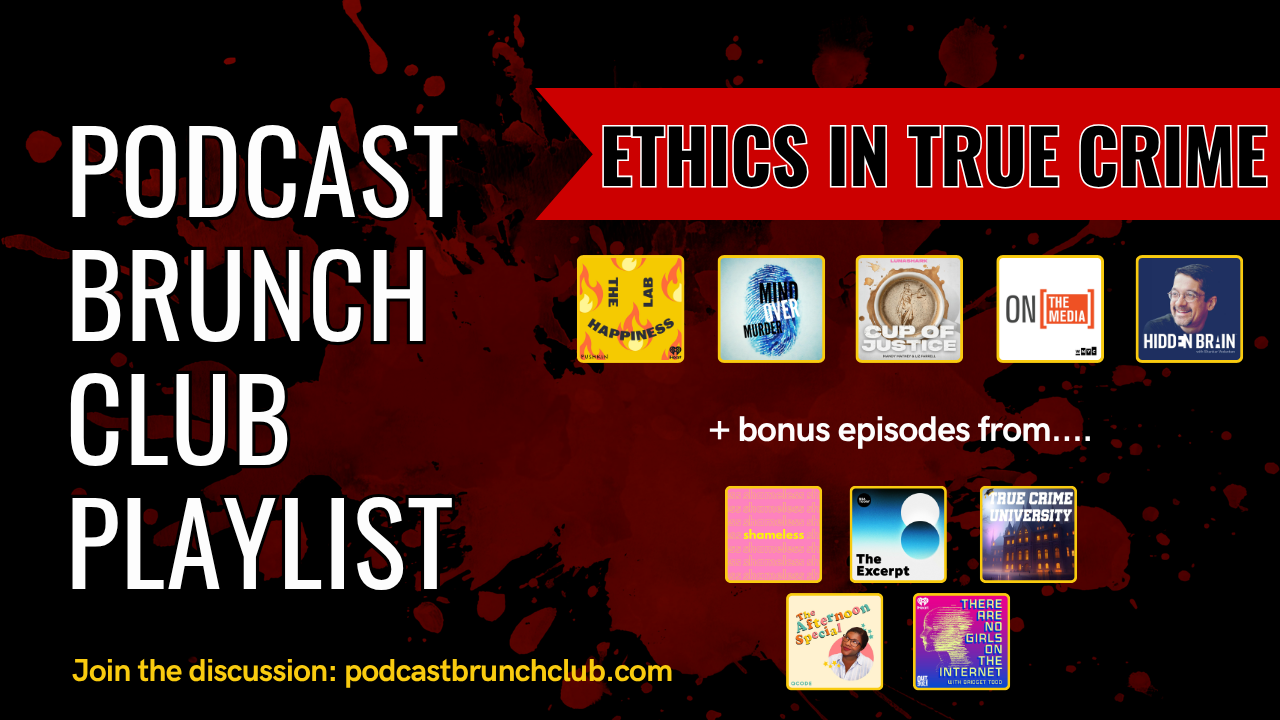
The Happiness Lab with Dr. Laurie Santos: “How to Feel More Empathy (With the Host of Bad Women: The Ripper Retold)” (November 2021, 38 min)
What does it actually mean to have empathy for the people at the center of true crime stories? This conversation explores how we relate to victims and perpetrators—and whether the way we consume true crime can help us become more empathetic or actually make us more detached from the human beings behind the stories.
Mind Over Murder: “BONUS: 8 Simple Rules for Being an Ethical True Crime Consumer” (August 2024, 48 min)
True crime isn’t just something other people make—we’re all participants when we listen, watch, share, and discuss these stories. This episode offers practical guidelines for consuming true crime more thoughtfully and raises the question of what responsibilities we have as an audience.
Cup of Justice: “COJ #107 – Amanda Knox On Trauma, True Crime Storytelling and Ethical Reporting” (November 2024, 57 min)
Amanda Knox knows what it means to have your own life become a global true crime story. She discusses trauma, media coverage, and the ways that storytelling can distort or exploit the experiences of the people who actually lived them.
On the Media: “What’s Wrong with True Crime?” (October 2025, 24 min)
Why are we so fascinated by stories of murder and violence—and what does that fascination cost? This episode takes a critical look at the true crime industry and examines the consequences of turning real-world tragedy into a form of entertainment.
Hidden Brain: “Murder Mystery” (December 2025, 52 min)
Our attraction to murder mysteries may reveal something fundamental about how the human mind makes sense of uncertainty, danger, and other people. This episode provides a psychological lens for thinking about why we’re drawn to true crime—and what that fascination might say about us as listeners.
Bonus podcast episodes:
- Shameless: “The true crime conundrum” (November 2024, 45 min)
True crime is everywhere, but our fascination with it comes with complicated ethical questions. This episode examines the tension between our appetite for real-life crime stories and the potential harm caused when tragedy becomes entertainment. - The Excerpt: “Victims retraumatized and perpetrators glorified: The ethical reckoning of true crime” (June 2025, 14 min)
What happens when true crime storytelling causes additional harm to the people who have already suffered? This episode looks at the ways victims can be retraumatized while perpetrators receive disproportionate attention, and asks what more ethical true crime storytelling might look like. - True Crime University: “Lesson: Why We Love True Crime and the Ethics of True Crime” (February 2023, 43 min)
Why are so many of us fascinated by murder, mystery, and the darker side of human behavior? This episode explores the psychology behind our interest in true crime while considering the ethical responsibilities that come with consuming stories about real people and real suffering. - The Afternoon Special: “Armchair Detective: An Exploration into True Crime Media” (September 2022, 52 min)
True crime listeners don’t just consume stories—we often speculate, investigate, debate, and try to solve the cases ourselves. This episode explores the “armchair detective” phenomenon and the ethical implications of treating real-world crimes as puzzles for an audience to solve. - There Are No Girls on the Internet: “Gabby Petito and the search for ethical true crime” (September 2021, 46 min)
The Gabby Petito case became a massive media phenomenon, raising difficult questions about why some victims receive extraordinary attention while others remain largely invisible. This episode considers what the case can teach us about media coverage, victimhood, race and gender, and the search for a more ethical approach to true crime.
Conversation Starter Questions:
- Why do you think people are drawn to true crime? Is there a difference between being interested in understanding crime and being entertained by it?
- When does telling a true crime story become exploitative? Is there a meaningful line between journalism, education, advocacy, and entertainment?
- Who gets to tell someone else’s story? Does it matter whether a true crime story is told by a journalist, podcaster, filmmaker, victim/survivor, family member, or someone with no connection to the case?
- What do creators owe the people at the center of their stories? Consider victims, survivors, family members, and even people accused or convicted of crimes.
- Does knowing that a story is about real people change the way you consume it? Should it? What responsibilities do listeners have?
- Can true crime actually increase empathy—or does repeated exposure to violence make us more desensitized?
- How much does consent matter? If a case is already part of the public record, does that give creators permission to retell it? What about information that is legally public but deeply personal?
- Is it possible to tell a compelling true crime story without sensationalizing the crime or turning the perpetrator into the main character? What would that look like?
- What role does money play in the ethics of true crime? Does it change your perception when creators, networks, or streaming services profit from someone else’s tragedy?
- After listening to these episodes, has your own approach to consuming true crime changed? Are there things you would now seek out—or avoid—that you hadn’t considered before?
How PBC Works: